
CATL aims to develop lithium-air batteries comparable in energy density to gasoline.
CATL aims for lithium‑air batteries
At the recent *Powering the Nation* forum, chief scientist of Chinese battery maker CAT (academician Wu Kai) announced that the company plans to develop lithium‑air battery technology. The theoretical energy density of such devices could reach 12,000 Wh/kg, almost comparable to gasoline (≈13,000 Wh/kg). If this goal is realized, the need for frequent charging of electric vehicles would disappear.
Why CATL is already ready for a new step
- This year the company begins mass production of sodium‑ion batteries. This decision is based on more affordable raw materials and demonstrates the company's ability to quickly shift from one technology to another.
- Developing a lithium‑air battery is a logical continuation of their experience: in six years they have already proven that they can bring a new technology into production.
How a “breathing” battery works
1. Material savings
- Instead of a heavy cathode made of nickel, cobalt or manganese, a lightweight lithium anode is used.
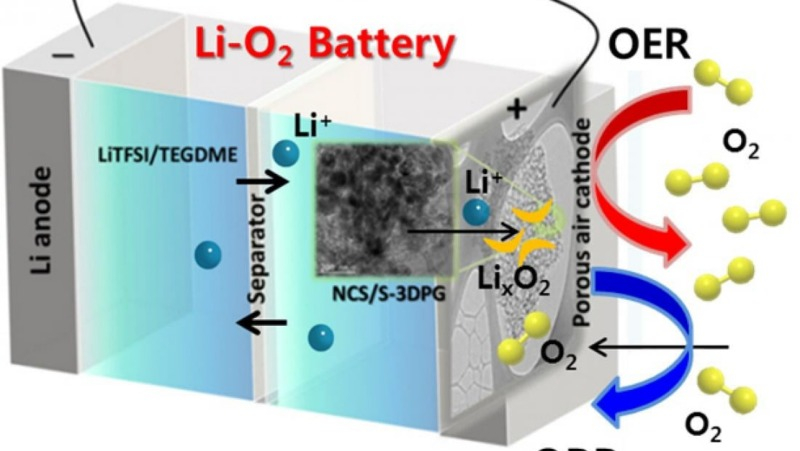
- Oxygen from the air acts as the reactant on the cathode side.
2. Charge/discharge process
- During discharge the battery “breathes” – it absorbs oxygen from the atmosphere, and during charging it releases it back.
Technical specifications
| Battery type | Energy density (Wh/kg) |
|--------------|------------------------|
| Lithium‑air | up to 12 000 |
| Gasoline | ≈13 000 |
| Modern Li‑ion | 250–270 |
| Solid‑state Li‑ion | ~500 |
Thus, lithium‑air technology could significantly increase driving range.
History and breakthroughs
- In the 1970s researchers first studied this technology, but humidity, CO₂ and catalyst degradation problems hindered its commercialization.
- Recent scientific advances have overcome these barriers. CATL is actively investing in further research, making the prospect realistic.
What it means for the auto industry
If lithium‑air batteries become practical, electric vehicles could travel more than 1,600 km on a single charge – a range comparable to internal combustion engines. This would eliminate the problem of frequent recharging and make electric cars as convenient to operate.
Aviation is already awaiting such technology: lightweight, high‑energy batteries could radically transform air transport.
 Asted Cloud
Comments (0)
Share your thoughts — please be polite and stay on topic.
Log in to comment