
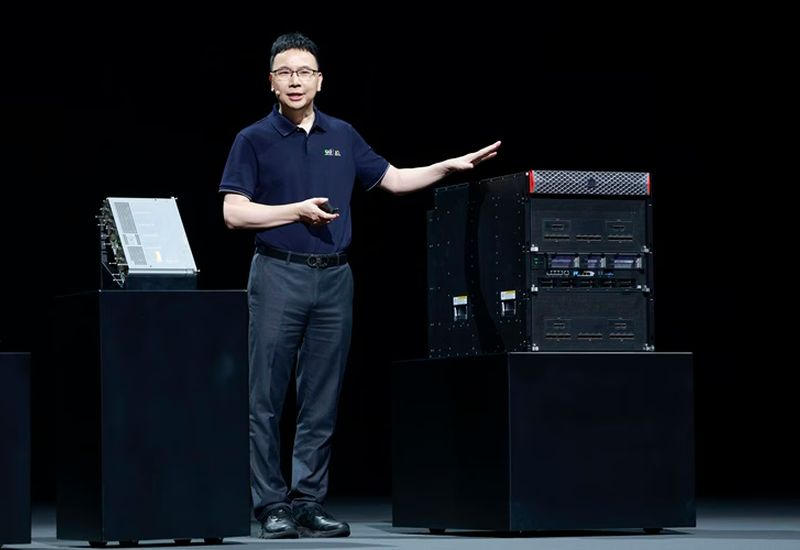
Huawei improved the compatibility of its Ascend 950PR with NVIDIA CUDA and is targeting shipments of hundreds of thousands of devices
Huawei Expands Its Own Accelerator Lineup
Since 2019, Huawei Technologies has been under U.S. sanctions, but that has not stopped it from actively developing its own component portfolio. Among the new products are the Ascend 950PR computing accelerators. According to Reuters, they have already received positive feedback from Chinese developers and this year plans to deliver about 750,000 units.
Why the 950PR Became More Popular Than Its Predecessor
The current Ascend 910C model failed to find demand among Chinese AI developers and cloud providers, even with a government import substitution program. Most companies prefer sticking with older Nvidia accelerators.
Unlike the 910C, the Ascend 950PR is better compatible with Nvidia’s CUDA ecosystem. This makes it easier to port existing software to new Huawei devices and improves their responsiveness in AI infrastructure. These advantages made the 950PR more attractive to the market.
Supply Plan
* In January, the company sent accelerator samples to clients for testing.
* Mass production is scheduled to start in April of this year, with large volumes available only in the second half of the year.
* Two main configurations:
* DDR variant – about $6,900.
* HBM variant – over $10,000.
Context With Nvidia
Since late last year, U.S. authorities have been preparing to allow legal shipments of Nvidia H200 accelerators to China, but Chinese regulators only recently approved their import. Now Nvidia customers must decide how many units they want to order before the company begins official delivery of the H200 in China.
The compatibility of new Huawei devices with Nvidia software makes the transition for Chinese developers to domestic solutions smoother. Additionally, the Ascend 950PR demonstrates better inference performance compared to its predecessor.
 Asted Cloud
Comments (0)
Share your thoughts — please be polite and stay on topic.
Log in to comment