
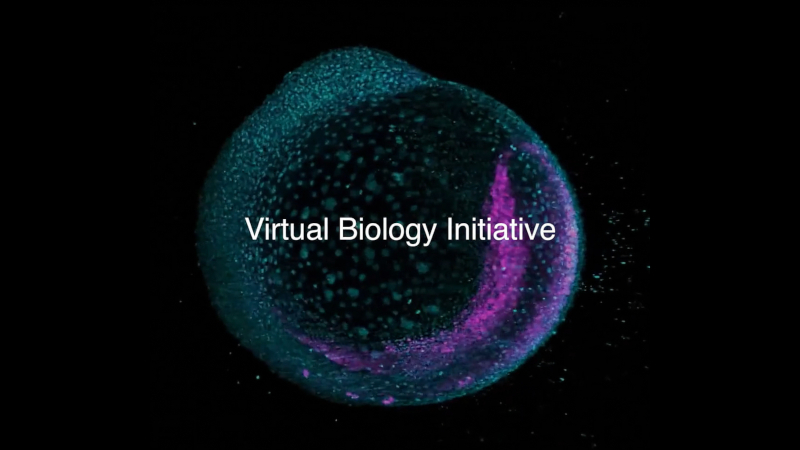
Mark Zuckerberg's Biohub has begun accelerating the treatment of all diseases using AI cell models
Biohub is investing $500 million in a five‑year project to create AI models of human cells
The nonprofit organization founded by Mark Zuckerberg and Priscilla Chan announced a half‑billion dollar investment in a research program spanning five years. The goal of the project is to build artificial models capable of predicting cell behavior both in normal conditions and under various diseases. This should accelerate the development of new treatments and preventive measures for a wide range of illnesses.
Key participants
* Biohub – the main initiator of the project.
* Nvidia – one of the partners providing computing power and the BioNeMo platform for biomedical research.
* Leading scientific centers – participate in data collection and analysis.
All collected data are planned to be made open to researchers worldwide.
Why it matters
According to Biohub leaders, AI models will allow scientists to study cell behavior at a scale and speed unattainable in traditional laboratories. If the models prove accurate enough, they will help identify disease causes and propose new approaches to treatment.
Zuckerberg already last year outlined Biohub’s long‑term mission – “to defeat all human diseases with a combination of AI and biology.” The organization was founded in 2016 to bring together scientists and engineers working on observing, measuring, and programming biological processes at the cellular level. Since then, Biohub has amassed the world’s largest datasets on individual cells and built powerful computational infrastructure for biomedical research.
Funding
* Total project budget – $400 million.
* $300 million goes to internal Biohub research.
* $100 million is allocated to external researchers working on the project.
* It is expected that the scale and quality of data will directly impact AI prediction accuracy.
Alex Rayvaz, head of Biohub’s scientific direction, emphasized the need for “orders of magnitude more data” than are currently available. He noted that new technologies for observing cells—from molecular to tissue level and in the context of health and disease—are required. While the exact volume of data is unknown, achieving it without international cooperation at this scale is impossible.
Industry context
AI biology is gradually becoming a distinct field of science and engineering. Scientific institutes, technology companies, and pharmaceutical giants are looking for ways to apply machine learning to study diseases and accelerate drug development:
* Isomorphic Labs and Google DeepMind use AI in the search for new drugs.
* Microsoft has released several AI models for healthcare, including medical imaging, genomics, and clinical record analysis.
* Nvidia’s BioNeMo platform is already used by biomedical companies to create drugs with artificial intelligence.
Thus, Biohub’s $500 million investment represents a significant step toward uniting AI and cellular biology in the fight against human diseases.
 Asted Cloud
Comments (0)
Share your thoughts — please be polite and stay on topic.
Log in to comment