
Microsoft acknowledged that incorrect drivers had been negatively affecting Windows laptops for years.
Microsoft Changes the Rules of the Game for Windows Drivers
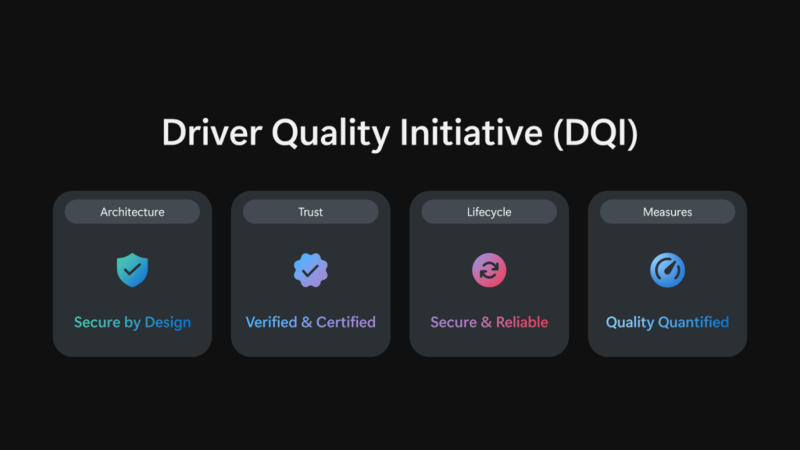
At a recent event, the Windows Hardware Engineering Conference (WinHEC) 2026, Microsoft announced a radical overhaul of its criteria for evaluating third‑party software, especially device drivers. The new review will include not only the absence of critical failures but also energy‑efficiency metrics.
What Has Been Until Now
* Low quality threshold – Windows considered a driver “stable” if it did not cause critical errors, measured via WER (Windows Error Reporting) telemetry and crash dumps.
* Even a stable driver could create hidden problems: delays in DPC calls, CPU monopolization by network drivers, audio crackling, FPS drops, and freezes.
Why This Matters
The most noticeable harm from the old system manifested in Modern Standby (a sleep mode similar to smartphones). Poor optimization of storage or Wi‑Fi controllers prevented laptops from entering power‑saving mode. As a result, the battery drained even while idle, yet telemetry reported the system as “healthy.”
New Initiative – Driver Quality Initiative (DQI)
* Expanded criteria:
* Stability
* Functionality
* Performance
* Power consumption
* Heat dissipation
* A driver can be deemed subpar if it accelerates battery discharge or forces fans to run at full power in standby.
* Removal of outdated drivers – they will no longer be available in the Windows catalog, preventing automatic installation of code that could disrupt laptop operation.
What This Means for Users
With the release of new energy‑efficient processors (Qualcomm Snapdragon X Elite, Intel Panther Lake) and their competition with MacBook CPUs, Microsoft aims to ensure more reliable and economical device performance. The new standards guarantee that drivers not only run error‑free but also support long battery life and low heat output.
 Asted Cloud
Comments (0)
Share your thoughts — please be polite and stay on topic.
Log in to comment