
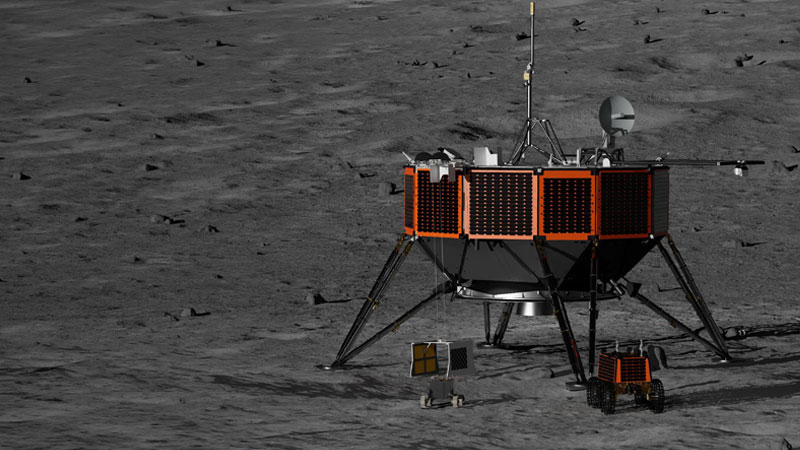
NASA will invest in lunar lander manufacturers; otherwise a base on the Moon will not appear
NASA shifts its focus: the Moon is the new priority
On March 24, 2026 NASA announced a change in the priorities of its space programs. The agency now sets itself the task not only of studying the Moon but also of establishing a permanent base on its surface.
Why commercial support is needed
To turn the planet into a “workplace,” a purely governmental initiative is insufficient – business must be involved. Unfortunately, private companies have so far received too few compelling offers. To change the situation, NASA announced an increase in the budget for the Commercial Lunar Payload Services (CLPS) program by almost 70 % — to $4.2 million.
What will change in CLPS
* The funding ceiling will rise from $2.6 million to $4.2 million – an increase of $1.6 million (≈61.5 %).
* This will allow NASA to procure more cargo delivery services to the Moon without developing its own landing platforms.
The main goal of expanding the program is to create infrastructure for long‑term human presence in the area of the lunar south pole and to prepare return systems to Earth.
What will be funded
* Payload integration
* Launch, transport, and landing of lunar modules
* Operation of modules and support of return systems
The new budget will increase launch frequency already in 2027–2029, which is critical for realizing Artemis plans.
Program participants
CLPS involves 13 American companies:
- Firefly Aerospace
- Intuitive Machines
- Blue Origin
- SpaceX
- Lockheed Martin and others.
Some of them have already demonstrated results:
* Firefly’s Blue Ghost successfully delivered a payload to the Moon.
* Intuitive Machines continues its series of missions with the Nova‑C module, despite technical difficulties.
In the coming years new flights are planned, including IM‑3 in the second half of 2026 and a Blue Origin mission.
What this means for NASA
The increase in the CLPS budget underscores the strategic shift to a commercial model of lunar exploration. The agency expects a significant rise in the number of landings, viewing private contractors as key partners within Artemis. This will accelerate the preparation of sustainable lunar infrastructure by 2030 and simultaneously stimulate the development of the U.S. commercial spaceflight market.
What still remains
At the time of the announcement NASA did not propose specific new missions to CLPS participants, and the companies have yet to present an expanded list of tasks. It is expected that this will change in the coming months. Meanwhile China is actively advancing its lunar programs without delay, and NASA has no time for a “slow‑down.” Starting next year, the agency plans more than ten deliveries to the Moon and possibly even more.
 Asted Cloud
Comments (0)
Share your thoughts — please be polite and stay on topic.
Log in to comment