
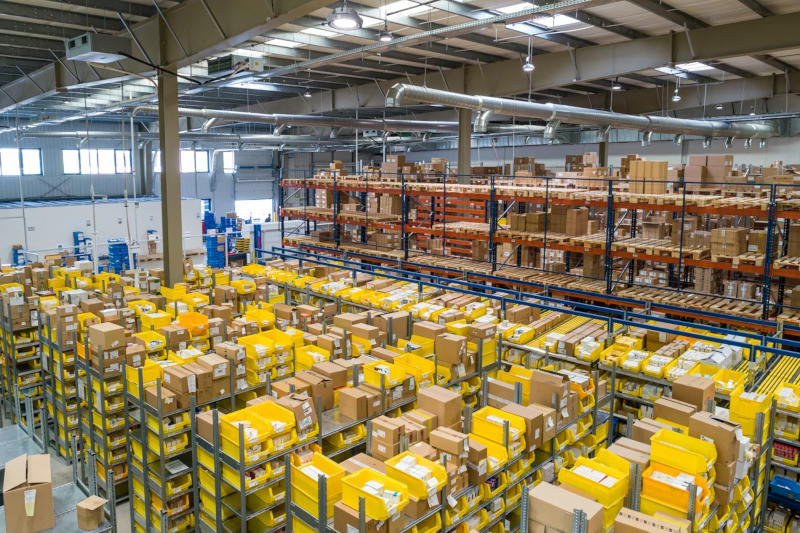
Robotization of warehouse facilities: by 2030, half of new spaces will operate without staff
Brief Summary
By 2030 more than half of new warehouses in developed markets will be designed as “robot‑oriented” – work without human involvement.
Robotic logistics raises wages and makes people less inclined to perform monotonous tasks.
Real‑time artificial intelligence optimizes warehouses, turning them from static objects into flexible structures that adapt to demand.
Implementing robotics allows maintaining throughput without excessive hiring; machines become key participants in processes.
Digital models shift from planning to continuous monitoring: dynamic routing, space allocation, and task distribution.
Success depends on data accuracy and infrastructure connectivity. Without a constant flow of information systems may operate with outdated data, reducing reliability.
As the number of people intervening decreases, the risk of failures rises; thus resilience must be ensured through communication, redundancy, and monitoring.
Companies that meet these requirements will not just install robots but also maintain lidar‑based mapping and video security systems, ensuring continuous warehouse operation.
Detailed Recap
Warehouse infrastructure development is moving toward systems where robots dominate everyday operations. Human involvement will shrink: Gartner analysts predict that by 2030 more than half of new warehouses in developed markets will be designed as robot‑oriented facilities where human labor is no longer considered necessary.
Revolutionary changes in logistics will lead to higher wages and a reduced willingness among people to perform monotonous physical work. Warehouses will cease to be static objects: artificial intelligence can optimize them in real time, turning spaces into flexible structures that adapt to changing demand.
Robotics is increasingly being implemented in the logistics industry. It helps maintain high throughput without excessive reliance on hiring cycles. As a result, machines become not just auxiliary tools but core participants in operational processes. As warehouse operations are automated, digital modeling systems move beyond planning and transition to continuous operational monitoring. Systems will dynamically adjust routing, space allocation, and task distribution.
Thus warehouses will become dependent on data accuracy and infrastructure connectivity. Without a constant flow of information, automated decision‑making systems risk operating with incomplete or outdated information, which in high‑volume conditions can reduce their reliability. As Gartner specialists note: “With fewer people who can intervene, the probability of failure decreases; therefore, resilience must be embedded at the core – from connectivity to redundancy and monitoring.”
Companies that understand these requirements will not merely deploy intelligent robots. They will maintain lidar‑based mapping and video security systems, ensuring continuous activity and communication necessary for uninterrupted warehouse operation.
 Asted Cloud
Comments (0)
Share your thoughts — please be polite and stay on topic.
Log in to comment