
Silicon Motion released SSD controllers on PCIe 6.0 that achieve speeds of up to 28 GB/s
Silicon Motion unveiled new SSD controllers at Computex 2026
At the Computex 2026 trade show, Silicon Motion presented an updated portfolio of solid‑state drive chips covering both consumer and enterprise segments. Below are the key highlights for each model.
| Segment | Model | Technology & Interface | Key Features |
|---|---|---|---|
| Consumer | SM2524XT | 6‑nm TSMC, PCIe 5.0, NVMe 2.1 | • No DRAM buffer (pure controller) • 4 flash channels, 16 CE lines • Up to 4800 MT/s per channel • Sequential read up to 14 GB/s, write – 12 GB/s • Random access – 2.2 M IOPS • Power: 2.5 W (active), 1 mW (sleep) • Supports 3D TLC/QLC NAND |
| Enterprise | SM8466 | PCIe 6.0 x4, NVMe 2.3 | • 16 flash channels, 8 CE per channel • Up to 4800 MT/s • Host throughput – 256 Gbps both directions (equivalent to PCIe 4.0 x16) • Compute‑storage capability and advanced enterprise features • Max capacity – 512 TB (3D TLC/QLC NAND) • Sequential throughput up to 28 GB/s, random access – 7 M IOPS |
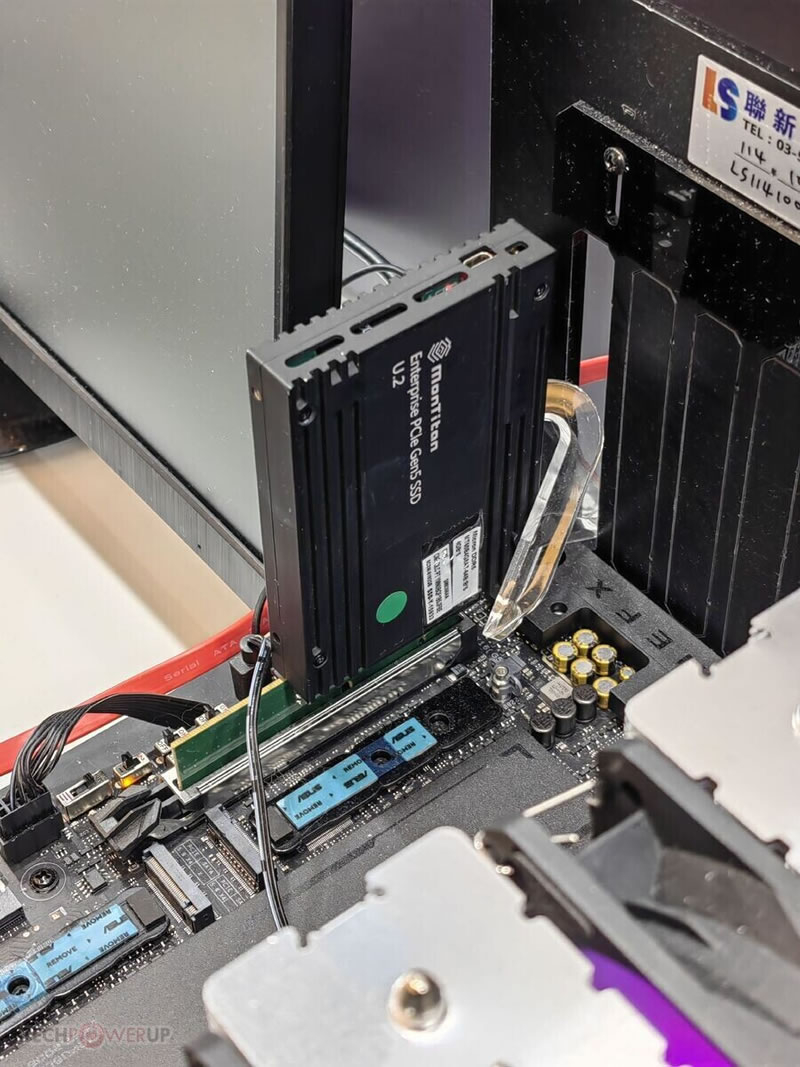
| Consumer | SM8388 (U.2 NVMe) | PCIe 5.0 x4 & x2, NVMe 2.1 | • 16 flash channels, 2400 MT/s • Max capacity – 128 TB • Test results: write 9329 MB/s, read 14602 MB/s • Random access: 450 k IOPS (write), 3585 MB/s (read) |
What’s new and why it matters
- SM2524XT – a pure controller without a DRAM buffer designed for mid‑range SSDs. Its high throughput and low power consumption make it suitable for laptops and budget desktop systems.
- SM8466 – the first PCIe 6.0 controller in the lineup, aimed at enterprise solutions. Its performance rivals GPU memory, making it attractive for data centers that need to store and process large AI language models.
- SM8388 – an updated controller for U.2 NVMe drives, delivering impressive write/read speeds and high capacity, ideal for servers and workstations.
Conclusion
Silicon Motion showcased a chip line capable of meeting diverse needs: from budget SSDs to enterprise solutions with extreme speed and scalability. The new controllers promise significant performance gains while maintaining energy efficiency and support for modern NVMe protocols.
 Asted Cloud
Comments (0)
Share your thoughts — please be polite and stay on topic.
Log in to comment