
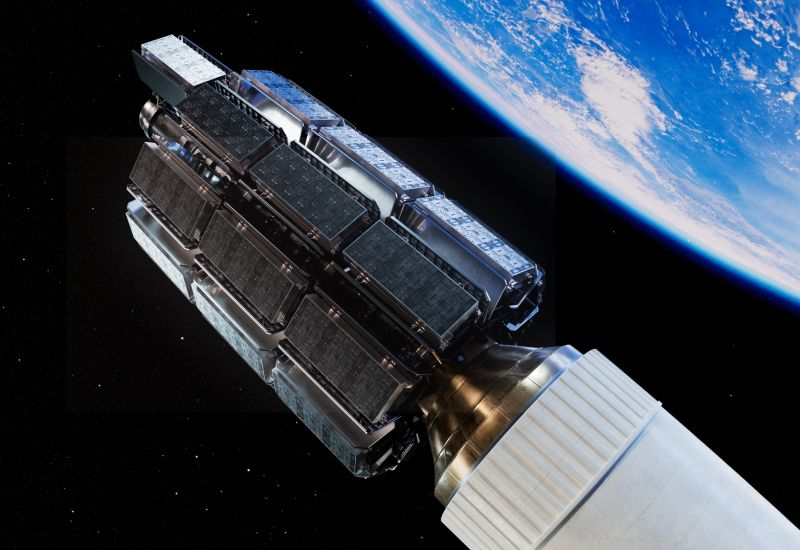
Amazon plans to rapidly increase the launch of established Leo satellites to outpace Starlink
Amazon – a new player in the race for an Earth‑proximal network
How this is being implemented
Current status: Leo already has more than 200 satellites in orbit (since April last year). In the first year, eight rockets were launched; the ninth launch is scheduled for Sunday. By the end of the first year, the company plans to complete 11 launches. Growth plans: Amazon intends to double the launch frequency and increase the number of satellites per flight. During the second year, the goal is 20 launches, each delivering a larger number of payloads.
Launch vehicles
• New Glenn (Blue Origin) – up to 48 satellites at once.
• Vulcan Centaur (ULA) – up to 40 satellites.
• Atlas V (ULA, upgraded launch vehicle) – 29 instead of the previous 27.
• Ariane 6 (ArianSpace) – last month launched 32 satellites.
Infrastructure
At Amazon’s facility in Washington state, more than 30 Leo satellites are manufactured weekly, and infrastructure for six missions is already ready, each capable of deploying more than 40 payloads—twice as many as with the older rockets.
Commitments to the FCC
The Federal Communications Commission expects that by July 30 Amazon will have launched a minimum of 1,600 satellites. The company applied for an extension, but competing Starlink is trying to convince the FCC to deny its approval.
Long‑term goals
By the end of Q1 2029, more than 100 launches with Leo satellites are planned.
Network size ranking
By July 30 Amazon should have 700 satellites, which will move it from second place to third in the global ranking of largest satellite groups.
Commercial audience
Currently, Leo services are available to a limited group of commercial customers; as the network grows, a significant expansion of the client base is expected.
Collaboration with other suppliers
At the end of last year, Amazon arranged for 10 additional Falcon 9 (SpaceX) launches and 24 New Glenn (Blue Origin) launches. With missions already completed, the total number of launches will exceed 100, and the number of satellites will be over 800.
Conclusion:
Amazon is actively scaling its Leo project, combining its own efforts with partnerships in rocket manufacturing and new launch vehicle deliveries. A substantial increase in the number of satellites and launches is planned for the coming months, which should bring the company to a level comparable to competitors like Starlink in terms of network size and expand its commercial potential.
 Asted Cloud
Comments (0)
Share your thoughts — please be polite and stay on topic.
Log in to comment