
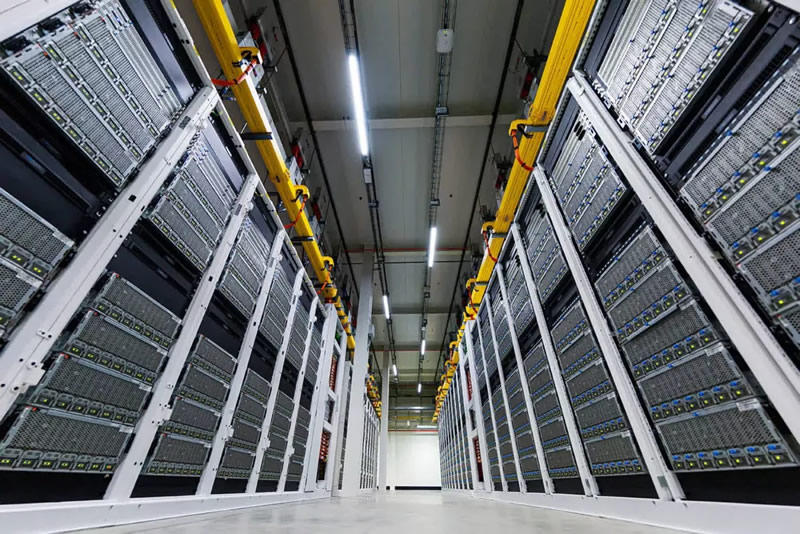
American AI companies will not be able to deploy more than thirty percent of their data centers this year due to a shortage of electricity
In the United States, major AI infrastructure development plans are at risk of collapse
According to TechSpot data, nearly half of the data centers slated for launch in 2026 will face either significant delays or be completely canceled. The main reason is a shortage of electricity: American companies cannot build facilities at the required pace, and the completion dates for many current projects remain uncertain.
What experts say
* Sightline Climate predicts that between 30 % and 50 % of all AI data centers planned this year will not be commissioned on time.
* At present, out of 140 projects with a total capacity of at least 16 GW, only about 5 GW are actively under construction by the end of 2026.
* The standard construction cycle for one facility ranges from 12 to 18 months, and another 16 GW remain only in the announcement stage without real progress.
Key barriers
1. Energy load – insufficient network capacity.
* Residents of future project sites already note rising tariffs, raising environmental concerns (Pew Research).
* To address the issue, many projects plan to combine energy sources: nuclear and renewables.
2. Component shortages – AI sector demand for memory and processors drives up consumer electronics prices, while a lack of transformers and batteries hampers construction.
3. Trade policy – attempts by the Donald Trump administration to bring production back to the U.S. with tariffs did not yield significant results.
* Domestic manufacturing capacity still does not meet the growing needs of the tech sector, so AI companies continue to import Chinese components.
Conclusion
The situation in the United States shows that without solving energy and supply chain problems, plans for large-scale AI infrastructure development are at risk. To ensure sustainable growth, it is necessary to improve power grids, accelerate key component deliveries, and rethink import substitution strategies.
 Asted Cloud
Comments (0)
Share your thoughts — please be polite and stay on topic.
Log in to comment