
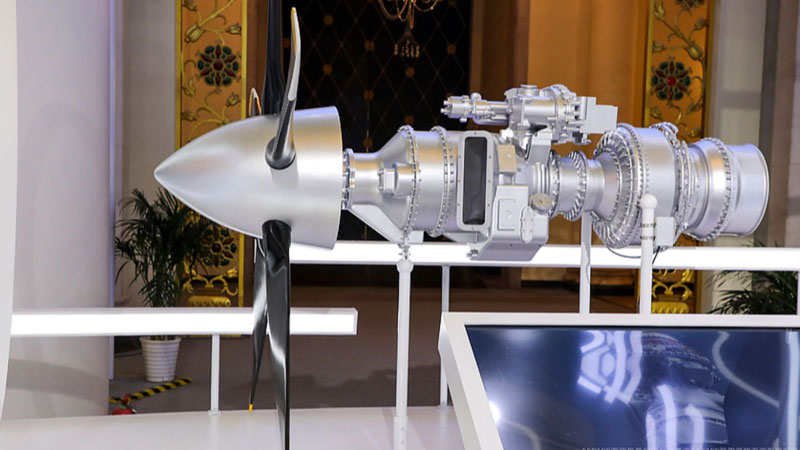
In China, the world’s first hydrogen fuel‑cell powered aircraft was tested.
China carried out the world's first test flight of a hydrogen-powered turboprop engine
*April 5, 2026* — At the Zhuzhou airfield (Hunan province) a successful test flight was conducted with an unmanned cargo aircraft equipped with the latest AEP100 turboprop engine. This is the first megawatt-class hydrogen engine that operates by burning liquefied fuel.
What was done
Aero Engine Corporation of China’s AEP100 – a megawatt‑class turboprop operating on liquid hydrogen combustion. The aircraft is an unmanned cargo transport weighing about 7.5 tons. Flight duration: 16 minutes, speed around 220 km/h, altitude 300 m, distance covered 36 km. Result: fully stable engine operation without failures; reliability confirmed in real conditions.
Why it matters
* A new technological milestone. Airbus had previously acknowledged the impossibility of quickly developing a hydrogen aircraft engine, while Chinese engineers successfully realized the project from key components to integration into an airframe.
* Transition to real-world use. The test paved the way from laboratory research to industrial deployment of hydrogen aviation.
* Reduction in carbon footprint. Hydrogen engines can significantly cut emissions and enhance the energy security of air transport.
Prospects
* Unmanned cargo transport. The most likely first commercial application is delivering goods to remote regions and islands.
* Passenger aviation. A slower adoption rate is expected; Airbus, according to unofficial data, has pushed back its hydrogen liner launch from 2035 to 2040–2045.
* Full development cycle. In China the production of “green” hydrogen will accelerate, along with refueling infrastructure and new materials for aviation.
Conclusion
The piloted flight of the AEP100 proved the technical feasibility of integrating hydrogen engines into aircraft. This event opens doors to widespread use of hydrogen energy in aviation, reducing its carbon footprint and strengthening future energy security.
 Asted Cloud
Comments (0)
Share your thoughts — please be polite and stay on topic.
Log in to comment