
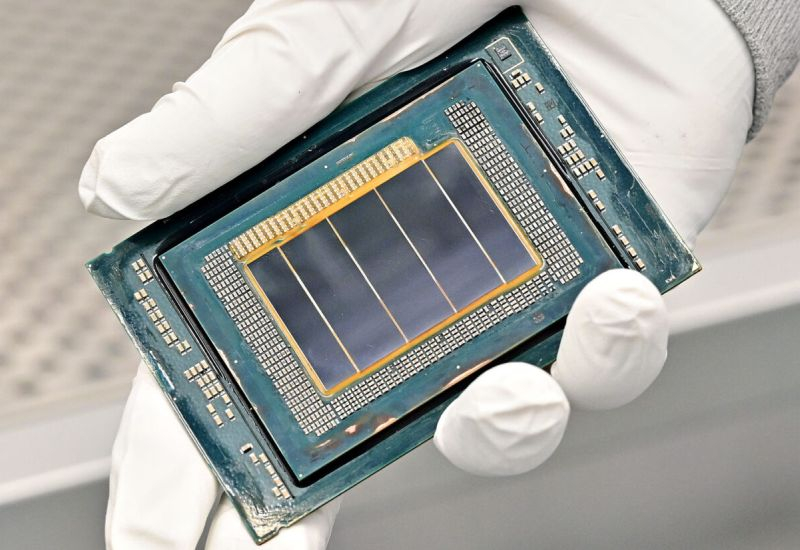
Intel admitted that when transitioning to the ultra-thin 18A process technology it overestimated its own capabilities.
Intel plans to expand its 18‑Å technology lineup to three models
In the coming months the company expects to bring to market three variants of chips built with the latest 18 Å (Angstrom) technology. This means Intel can already talk about the errors made during the learning process and learn from them.
What the CFO acknowledged
At a Bank of America conference, David Zinsner noted:
> “At the beginning of last year I thought that when we moved to 18 Å we had two main problems.
>
> 1️⃣ We tried to do too much at once, which slowed the process.
>
> 2️⃣ At the same time we were trying to improve both performance and yield – almost like flying a plane in the air while fixing a wing immediately.”
How the problems were solved after a leadership change
After Patrick Gelsinger stepped down as CEO, Zinsner and Michelle Johnston Holthaus systematically eliminated difficulties:
1. Stabilizing performance – the first goal, after which regular improvements in chip quality began.
2. Opening data for partners – under the new CEO Lip‑Bu Tan, the company shared key development process information with customers and suppliers. This decision proved critically important: external experts helped quickly resolve issues, and with open collaboration yield started to rise month by month.
Goals for 2027
By the end of 2027 Intel aims to reach a defect level that will allow it to meet planned profitability. Meanwhile, the newer 14 Å technology has an even more ambitious schedule: at a similar stage of adoption it promises better performance and quality than 18 Å. Success with 14 Å will be easier thanks to already proven GAA (gate‑all‑around) transistor structures and power‑back‑feeding introduced during the 18 Å process.
CPU market and strategic moves
Zinsner did not assess the growth dynamics of the CPU market in the context of increased focus on inference, but he smiled: “Right now everything labeled CPU will be sold.” The main problem is insufficient manufacturing capacity to meet demand. Therefore Intel is ready to enter longer‑term contracts with customers to reduce risks when expanding production and planning sales volumes.
 Asted Cloud
Comments (0)
Share your thoughts — please be polite and stay on topic.
Log in to comment