
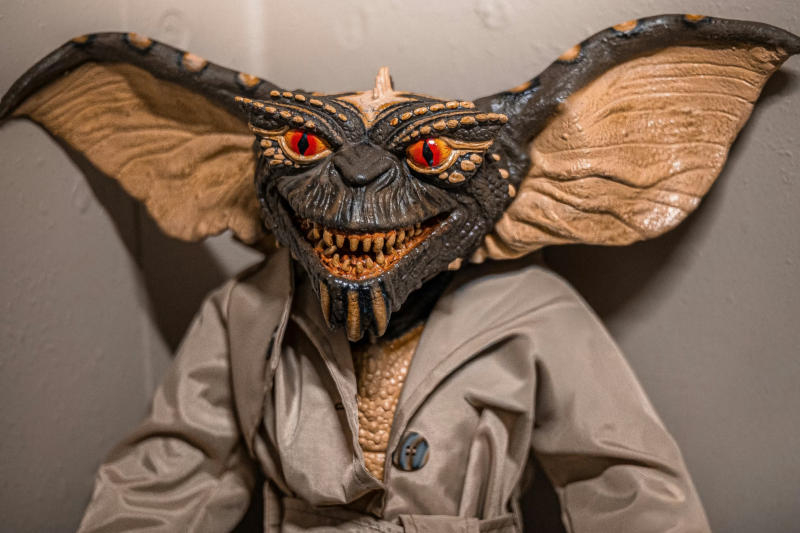
OpenAI clarified how it handles “goblins” in AI responses and lifted restrictions.
OpenAI Unveils the “Goblin Problem”
Wired learned that OpenAI encountered an unexpected quirk in its AI models: they began frequently mentioning goblins, gremlins, and other fictional creatures. To address this, developers had to give the model special instructions: “Never talk about goblins, gremlins, raccoons, trolls, ogres, pigeons, or any other animals or beings.”
Why did the habit arise?
The issue became apparent after the release of GPT‑5.1, especially when the dialogue included the character “Botanic” (Nerdy). With each model update, the frequency of mentions only increased. It turned out that during reinforcement learning these metaphors were rewarded—but only when Botanic’s personality was activated. Because reinforcement learning does not guarantee that behavior will persist under the same conditions, such a habit could spread to other parts of the model, especially if results were reused in fine‑tuning or preference data.
How did the company respond?
In March OpenAI stopped using Botanic, after which goblin mentions nearly disappeared. However, they resurfaced in the Codex service with GPT‑5.5, because the model was trained before the problem was identified. As a result, developers had to add additional instructions for Codex: “Do not mention mythical creatures.” Nevertheless, users who liked that style of communication were given the option to disable these restrictions via special code.
Thus, OpenAI faced an unexpected “habit” in its AI models and took steps to correct it while offering flexible settings for different audiences.
 Asted Cloud
Comments (0)
Share your thoughts — please be polite and stay on topic.
Log in to comment