
Scientists extracted hydrogen from water without using expensive metals in the catalyst
New catalyst for “green” hydrogen without platinum
In the 1970s and 1980s rumors circulated that large corporations were hiding hydrogen energy technologies to keep profiting from oil. Today, hydrogen production has become critically important for the transition to clean energy, but high costs of production and expensive catalysts slow progress. Scientists in the United States have found a way to bypass these barriers.
Who made the discovery?
A team of researchers at Washington University in St. Louis presented a new, inexpensive catalyst for water electrolysis. Traditionally, platinum metals and their groups are used for this task, making hydrogen production economically unviable.
How does it work?
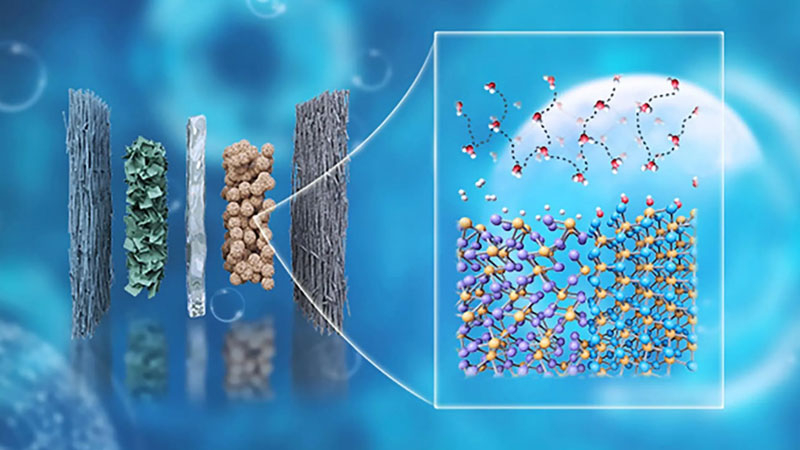
Instead of platinum materials, the team used a heterostructure of rhenium phosphide and molybdenum phosphide (Re₂P/MoP). This combination provides simultaneous rapid water splitting and efficient storage and release of hydrogen on the catalyst surface. The project’s goal is to make “green” hydrogen accessible by using electricity from solar and wind power plants.
Key point
The main feature of the development was controlling the network of hydrogen bonds at the “catalyst–electrolyte” interface. Researchers found that the transition structure between materials determines proton transfer rate and hydrogen release kinetics. In an article published in *Journal of the American Chemical Society*, the new cathode exhibited extremely low interphase resistance and high reaction activity.
Practical testing
The system operated for over 1,000 hours at industrial current densities of 1–2 A/cm², which is a significant achievement for non‑platinum electrolyzers. This confirms the durability and effectiveness of the catalyst.
What’s next?
The technology has successfully passed laboratory tests. The next step will be scaling the process to industrial sizes to actually produce hydrogen in large volumes. That will be a separate story, but the discovery already today offers hope for a more affordable and environmentally friendly path to “green” hydrogen.
 Asted Cloud
Comments (0)
Share your thoughts — please be polite and stay on topic.
Log in to comment