
The future of Google's artificial intelligence is largely determined by user trust and access to their personal data
Google announced new AI features that heavily rely on user data
At the recent I/O 2026 event, the company unveiled a range of interesting capabilities based on working with users' personal information. The main idea is to make artificial intelligence more of an “assistant” that knows your calendar, email, and even photos.
What’s new and how it works
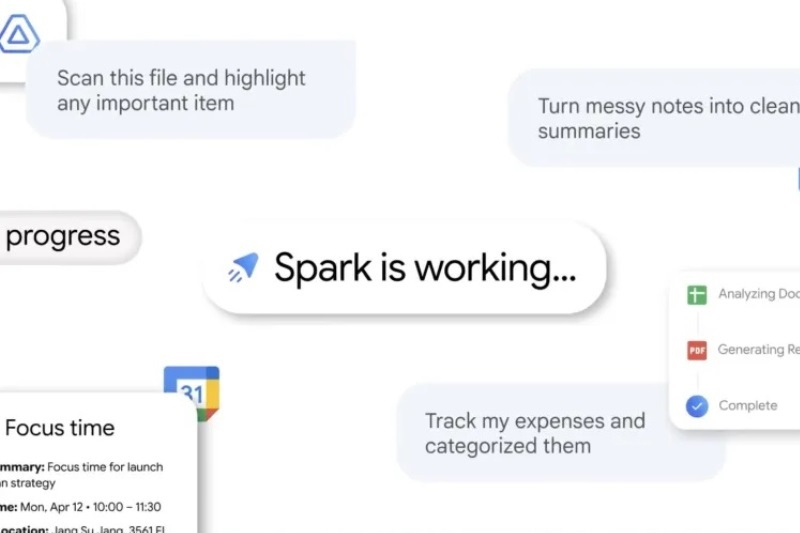
Gemini Spark – a constantly active AI agent
Helps plan events, reminds you of meetings, and performs simple tasks in Workspace. It can connect to third‑party services (Canva, OpenTable, Spotify, Instacart, Adobe). Support for accessing local files on Mac via a technology similar to OpenClaw is planned.
Daily Brief
Scans incoming Gmail messages and provides a brief overview of the day: calendar meetings, important emails, etc. Already available for Google AI Plus, Pro, and Ultra subscribers.
Extended Gmail‑AI
Generates task lists and suggests email responses.
Deep Research (Gemini)
Uses data from mail, cloud storage, and chats as sources for deeper queries.
Why it matters
- Trust in data – Google emphasizes a simple consent menu: users can give Gemini access to their services but are not required to. This differs from OpenAI/Anthropic, where connecting third‑party apps often requires additional settings.
- Personalization without extra requests – in January 2024, Google launched *Personal Intelligence*, allowing Gemini to automatically analyze Gmail, Google Photos, search, and YouTube history. Now answers become more relevant because the AI “sees” context.
- Gradual expansion of integrations – since 2024, Gemini has already been present in Workspace (Gmail, Docs, Sheets). Over recent months, new features and services have been added.
Things to consider
1. Optional access – users can disable data access, but then the AI will be less useful.
2. Growth potential – OpenClaw’s success shows that tools with deep file access become indispensable for boosting productivity.
3. Trust as a key factor – Google’s future AI tools largely depend on how willing users are to share confidential information.
Thus, Google continues building an ecosystem of personalized AI assistants based on access to personal data. The success of these solutions will be measured by how many people trust the company with their data and want to use the new capabilities.
 Asted Cloud
Comments (0)
Share your thoughts — please be polite and stay on topic.
Log in to comment